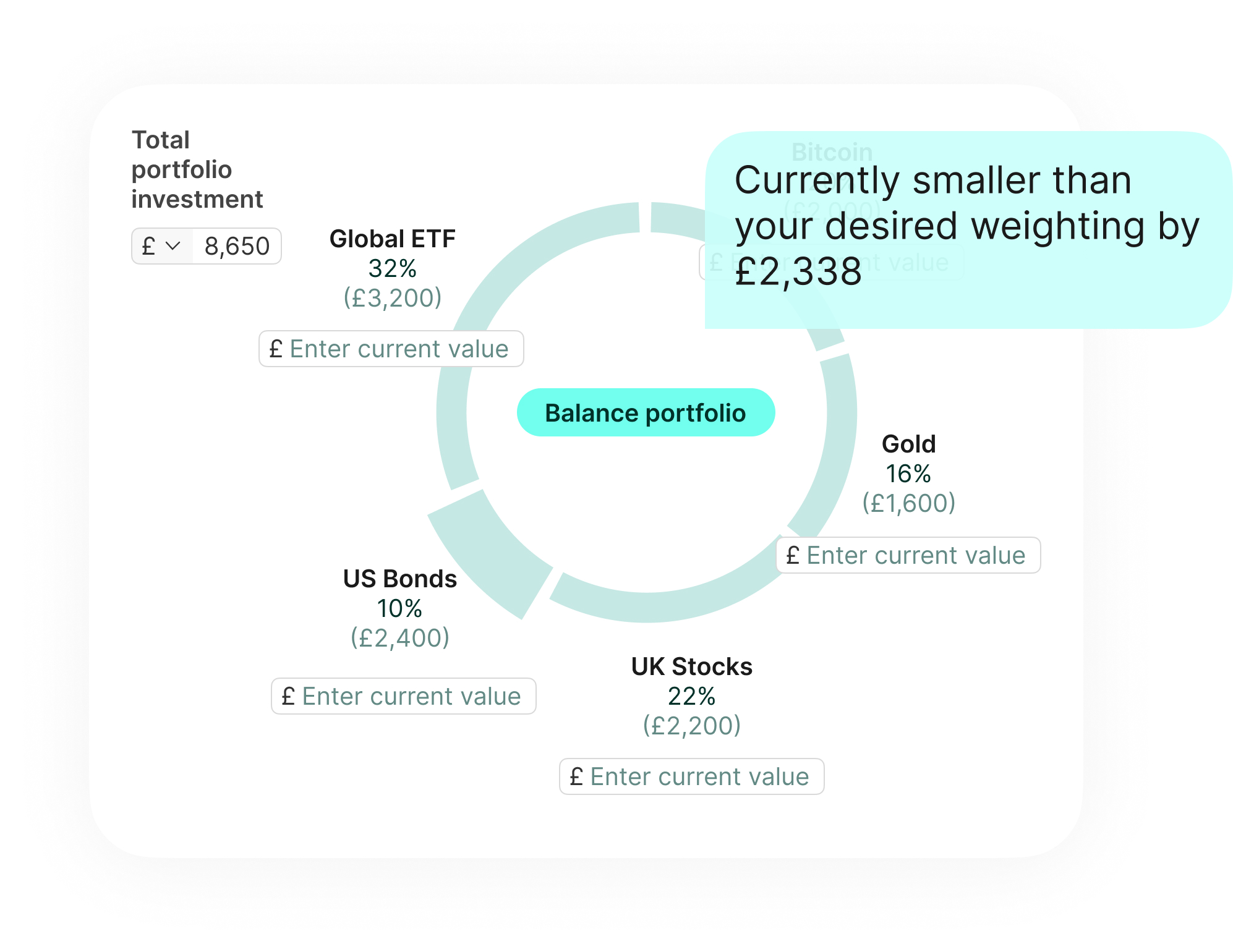
‘Rebalancing’ is one of those terms that gets thrown around a lot in investing — and it sounds more complicated than it is.
This content is for educational purposes only and is not financial advice. Investment values can fall as well as rise, and you may get back less than you invest.
Here's the simple version: rebalancing means buying and selling a bit of what you already own, to bring your portfolio back to the mix you originally intended.
Say you decided on a mix of 80% stocks and 20% bonds. A year later, stocks have had a great run — and without you doing anything, your portfolio is now sitting at 87% stocks and 13% bonds. You haven't made the decision of that extra 7% of stocks ie. to take on that ‘additional risk’, but your portfolio has — simply because the things that grew the most now make up a bigger share of the total.
Rebalancing is the act of nudging it back: selling a little of what's grown (stocks, in this case) and topping up what's shrunk relative to the plan (bonds), until you're back at your original 80/20 split.
A couple of things worth knowing
Rebalancing isn't primarily about boosting returns — its main job is keeping your portfolio's risk level matched to the one you actually chose. But there is another, less known concept behind the practice – when you trim the parts of your portfolio that have grown (and therefore become relatively more expensive) and top up the parts that haven't (and are relatively cheaper), rebalancing can, over the long run, give your returns a modest helping hand too — without you needing to predict anything about where markets are headed next.
This effect tends to show up most over long periods and during volatile markets, where different asset classes take turns leading and lagging. In steadily trending markets, where ‘the thing that's been winning keeps winning’, the effect is far less noticeable — and may even work slightly against you in the short term. Either way, it's a side effect, not the main reason to do it.
There's also no single "correct" frequency. Some people rebalance on a calendar — monthly, quarterly, or annually — while others wait until their allocation has drifted by a certain amount before acting. Either approach is reasonable. What matters more is having some plan, rather than never checking at all (portfolio drifts silently for years) or checking obsessively (reacting to every market wobble, which tends to do more harm than good).
Why it's worth doing at all
Because your risk tolerance didn't change, even if your portfolio's risk level did. The whole point of deciding on a mix in the first place was to match your investments to how much risk you're comfortable with. Left alone, that match slowly drifts — and a few years of drift can leave you holding a different portfolio than the one you actually chose (much more / less riskier than you previously decided).
Rebalancing isn't exciting. But it's one of the few things in investing that's entirely within your control, has minimal costs, and quietly keeps your plan actually being your plan — with the added bonus of mechanically nudging you toward buying low and selling high along the way; and you don’t need a money manager to do it for you – just use Meedo 🙂