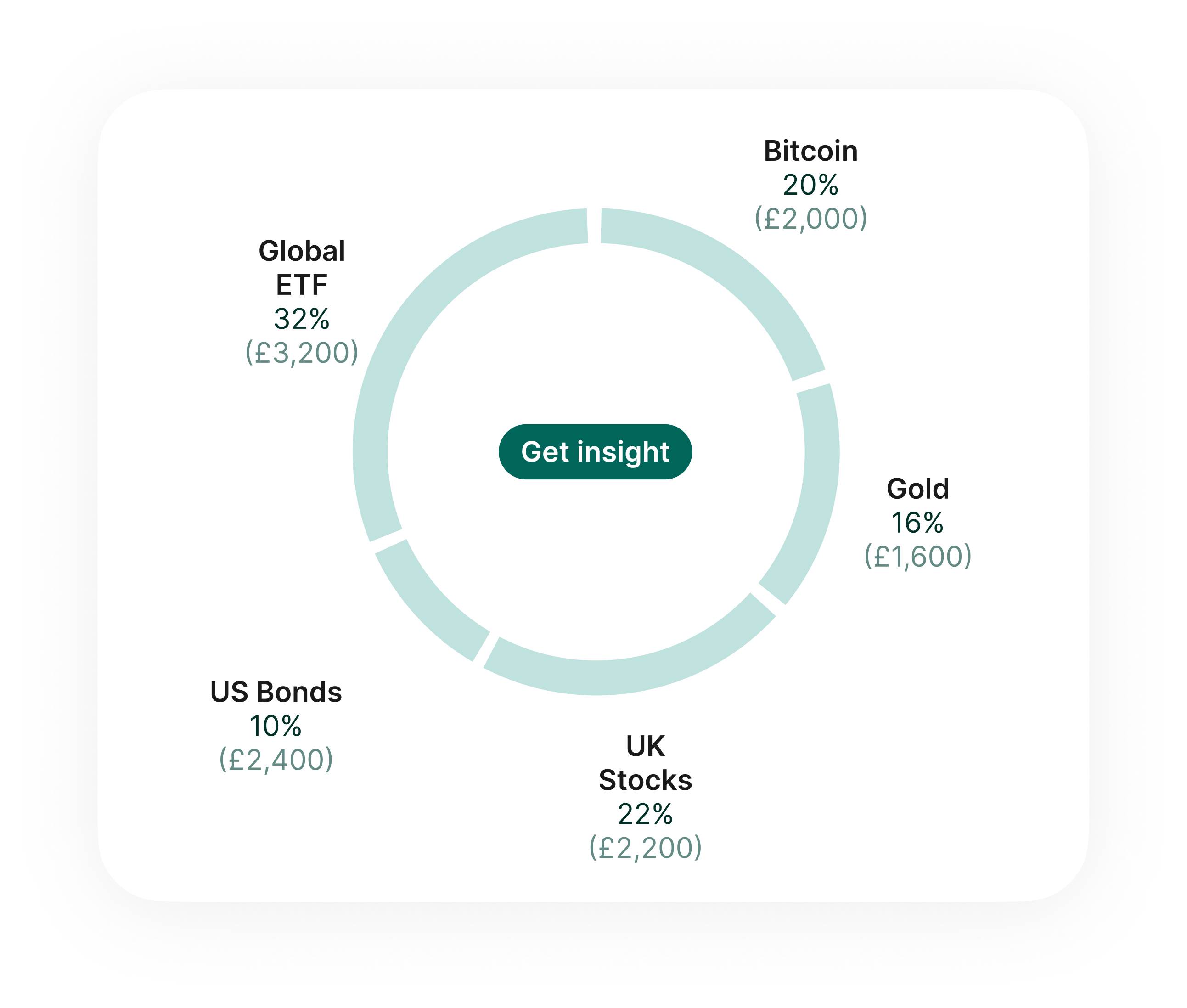
How many funds do I actually need to own to be ‘diversified’, and what should they be?
The answer isn't ‘more’... it is: ‘the right ones, in the right proportions’ — and most people get this wrong, in a very specific way.
This content is for educational purposes only and is not financial advice. Investment values can fall as well as rise, and you may get back less than you invest.
Here's the thing that nobody tells you clearly enough: owning lots of funds doesn't automatically mean you're diversified. If you own two ETFs that both hold large amounts of the same big-name stocks, you're not spreading your risk — you're doubling down on the same companies, twice. This is called overlap, and it's one of the most common (and least visible) mistakes DIY investors make.
So how do you actually design a portfolio properly? It comes down to four things:
Decide your ‘asset allocation’ first — before you pick a single fund
Asset allocation is just a fancy term for how you split your money across different ‘types of investments’ (ie. asset classes): shares, bonds, cash, property, and so on. It's like deciding what types of food you’re going to buy, before you start filling your trolley.
This is the bit most people skip. They open an investing app, search "best ETF 2026," buy whatever looks good, repeat a few times, and call it a portfolio. But the order matters — decide your mix first, then find funds that fill each part of it, not the other way round.
To work out your mix, three questions matter most: how long are you investing for, how would you feel if your portfolio dropped 20% next month, and what's your actual financial situation right now (income, other savings, existing investments)? These three questions — your time horizon, your comfort with risk, and your current financial situation — are the starting point for deciding where your money goes.
Pick a small number of funds that each do a clearly different job
Here's where overlap creeps in. Two large-cap dividend ETFs can hold 60-70% of the exact same companies — so owning both doesn't double your diversification, it just doubles your exposure to the same handful of names, with extra fees on top.
The fix isn't "own more funds" — it's "own funds that each cover a genuinely different part of the market." A reasonable starting point for most DIY portfolios might be a global equity fund (your growth engine), a bond fund (your ballast, smoothing out the bumps), and maybe one or two more targeted funds for anything else you specifically want exposure to. For most investors, the right number isn't "as many as possible" — it's "as few as necessary" to cover the key parts of the market you actually want exposure to.
Before adding any new fund to your portfolio, it's worth a quick gut-check: what does this actually add that I don't already have? If the honest answer is "not much," that's usually a sign of overlap, not diversification. If you’re not too sure – generating some insights from some possible options within Meedo’s portfolio designer tool, wouldn’t be the worst place to start ;)
Pick a strategy — and then leave it alone
This is the unsexy bit, but it's the part that actually matters most. A strategic approach means broadly diversifying across and within asset classes, with fixed allocations that get rebalanced periodically — not allocations that shift based on what feels exciting this month.
In plain terms: decide your mix (say, 80% equities, 20% bonds), and stick to it — not because the numbers are magic, but because constantly tweaking based on headlines, hot tips, or "this sector's about to blow up" is one of the most common ways DIY portfolios quietly underperform their own plan.
Rebalance — don't just set and forget completely
Over time, your carefully chosen mix will drift. If equities have a great year, they'll grow to be a bigger slice of your portfolio than you originally intended — which means you're now taking on more risk than you signed up for, without having actively decided to.
Rebalancing means selling a little of what's done well and reinvesting it elsewhere, to bring your portfolio back in line with your original plan — sometimes that means selling some shares and buying bonds, sometimes the other way round. It's not about timing the market. It's about staying aligned with the plan you made when you were thinking clearly, rather than the plan your portfolio has drifted into by accident. This usually involves a bit of fiddling with a spreadsheet, unless of course you decide to use Meedo’s portfolio rebalancer tool – simply enter in the rough current value of each of your investments, hit ‘Rebalance’, and Meedo works out the difference between the amount that you’ve decided you want to be invested, compared to the current amount that you are invested – making it super-simple to see any trades that you could make to bring your portfolio back into being perfectly balanced.
The headline
A good portfolio isn't the one with the most funds, the most exotic exposure, or the most recent winners. It's the one where every holding is doing a clearly different job, the overall mix matches how long you're investing for and how much risk you can stomach, and you've got a simple plan for checking back in and nudging it back into shape every so often.
That's the biggest & most important part, that most investors don’t learn until investing for years – the rest is just noise.